

I had a phone meeting with my director/producer over the weekend. Got some questions answered and received some much needed guidance.
All that means that I’m back to working on the horror feature I can’t talk too much about.
But what I can talk about is one of my favorite topics: my outlining process.
If you’re a regular reader, this may look familiar:
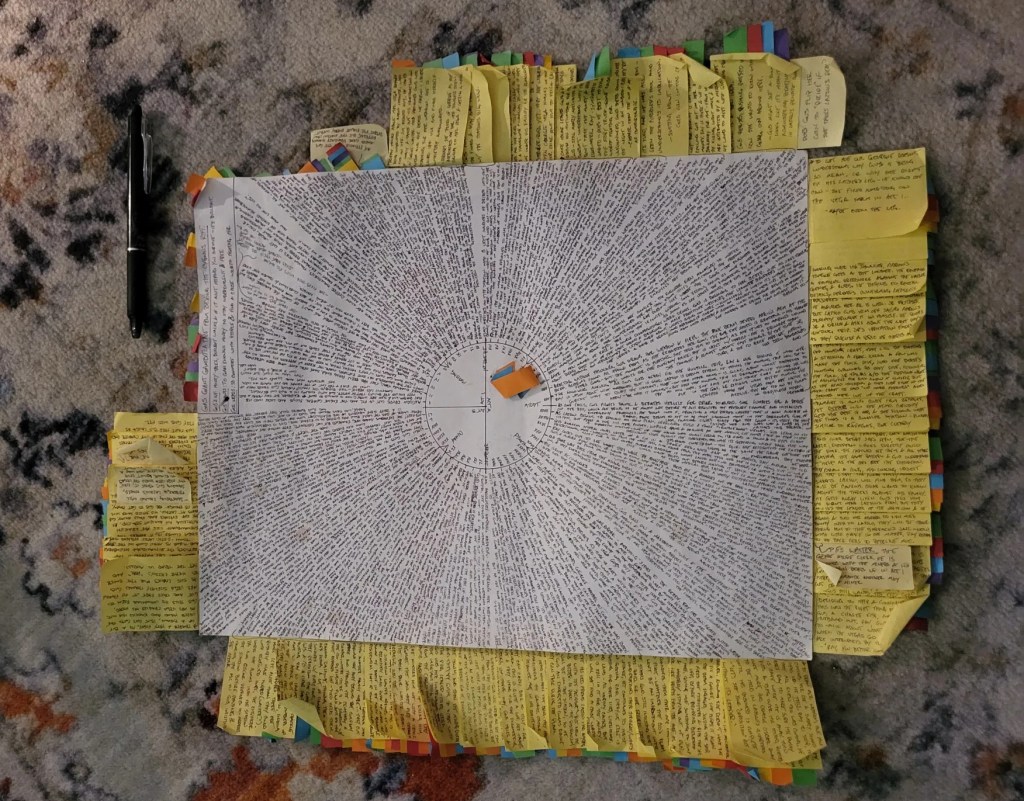
If you’re not familiar, that’s my outline for Gas Giant Gambit, my space-western novel (still waiting to hear back from the publisher that requested the full transcript, so keep those fingers crossed! And you can read the first chapter here!).
It’s very complicated. Perfect for a 400+ page sci-fi epic; not so great for a 90 minute, micro-budget horror movie.
So, what do I do instead?
Something pretty similar, actually.
When I first wrote my original horror screenplay Uncanny Valley, I dove straight into the Save the Cat screenwriting book series by the late Blake Snyder. If you’re new to screenwriting, I highly recommend the books and the website; they’re all incredibly helpful.
In the books, Snyder lays out an outlining method that I have modified a little. Using a corkboard (or dry erase board, or whatever you prefer), and 40 index cards, one for each scene, you build your movie. I’ve basically just added the radial element I use for my novel outlines.
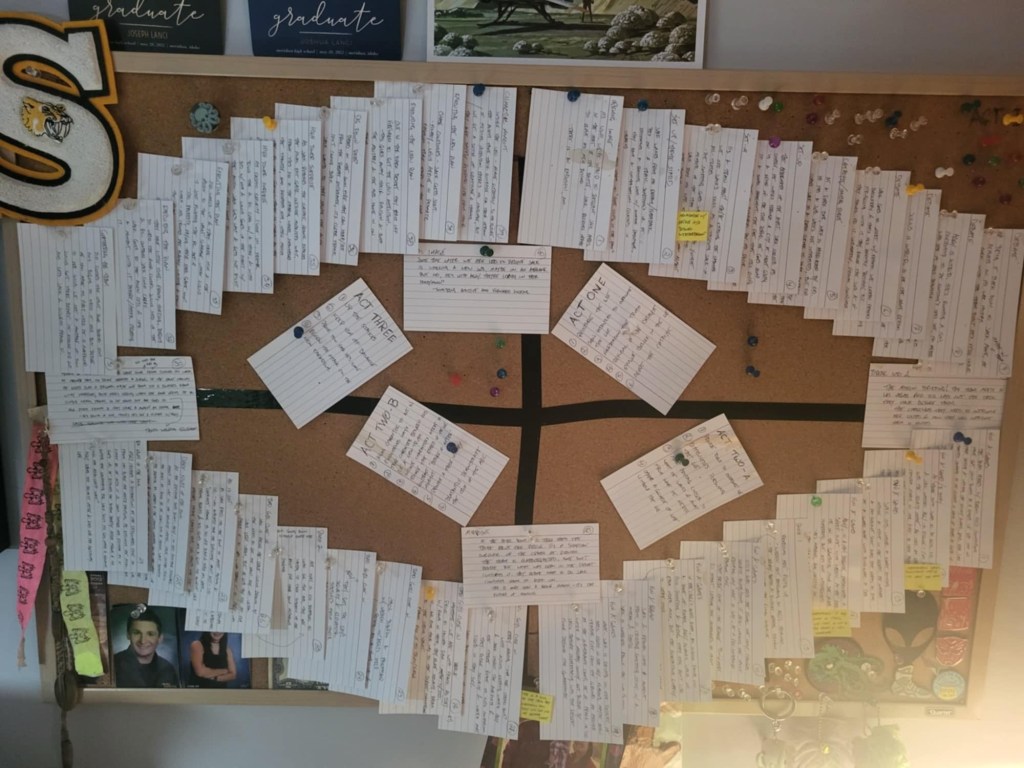
Each act gets 10 cards (Act 2 is broken into 2a and 2b, on either side of the midpoint), with the final card in each being a major plot point.
The treatment I’m working on now (which is basically a detailed summary done to iron out details before diving into writing the full screenplay) is the third treatment for this film.
For the first, I did this kind full outline and then wrote it out in a 10 page summary. But so much changed after that initial treatment (number, age, and gender of characters, locations, special effects, etc.) that when I went to write the second version it was almost brand new. So, in an effort to not waste time and get something back to my director as quickly as possible, I skipped this full outline step and tried for a more basic one before writing a five page treatment.
It worked well enough, and the changes I’m making now for the third version are far less extreme than those asked of me for the second. However, now that it’s time to fit in a the few changes the director wants, I’m finding they may alter some major story elements and I want to return to a full outline before writing up the latest treatment.
So, back to the board I go.
I does mean more effort at an earlier part of the process, and I could get burnt for it if my director doesn’t like the directions I go in. But, based on our latest conversations, I think we’re close to a final version, and putting in this extra effort now may save me time later. If the director approves of this treatment, I’ll be able to start writing the screenplay immediately, outline already in hand.
He says he’d like to start shooting “this year of next,” which is fantastic! I think “this year” is unlikely, but keep your fingers crossed for next!
Wish me luck!
 E.S. Raye
Leave a comment