

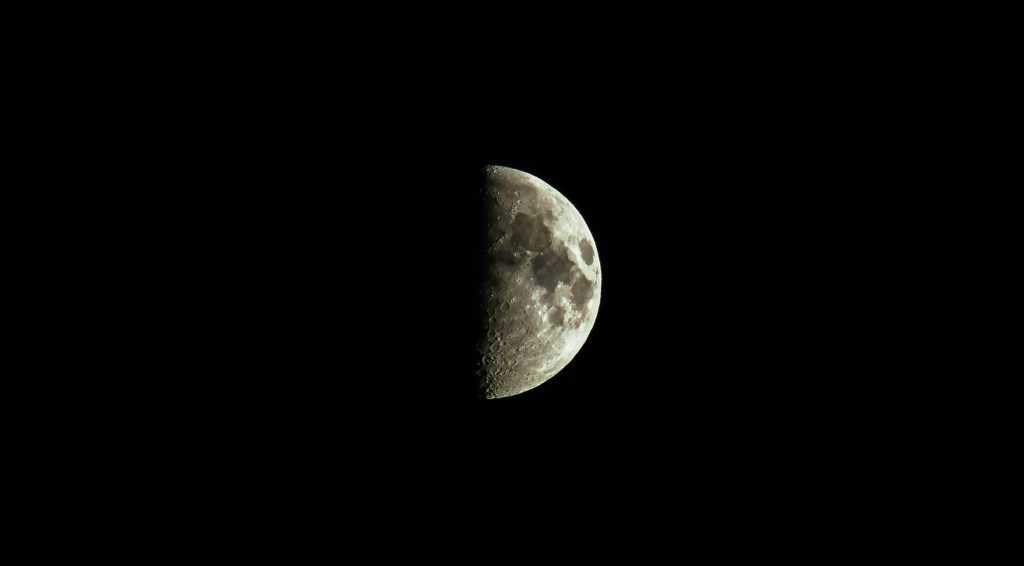
As a life-long enthusiast of science fiction, science fact, and space exploration as a concept, I have always sort of (and perhaps naively) took it for granted that we would one day go back to the moon. It felt like an inevitability to me.
Yet, now that it’s finally happening (assuming the drive towards Artemis IV can survive the unpredictable political future of the United States), I’m still in awe of its fact. And despite the turmoil and disfunction in the world and American culture, seeing the first person of color and first woman (as well as a Canadian crewman) not only reach the moon, but become the first humans to go so far, I can’t help but feel pride for humanity, hope for the future, and inspired to keep reading and writing science fiction and looking to the stars.
And I hope I’m not alone.
Back in the ’60s, during the height of the space-race and the Apollo missions, people watching humans going into space and then on to the moon for the first time certainly felt that inspiration. A surge in popularity for scifi followed, and many authors considered the greats of genre came out of that time period.
Alongside astronauts like Alan Shepard, John Glen, and Neil Armstrong, authors like Arthur C. Clark, Phillip K. Dick, Frank Hurbert, Kurt Vonnegut, and Ursula K Le Guin (not to mention Gene Roddenberry and Star Trek) helped usher in a golden age of science fiction.
I think it’s time for another.
It may seem somewhat self-serving, being a scifi writer and hoping real world events turn general audiences towards my genre. But I want to see a rush to science fiction not just as a writer, but as a fan who has long tried to bring others into the fold.
While every sub-genre of scifi deals with science in some variety, the variety of scifi is endless. Want something dark and moody? Try technoir. Prefer something hopeful and bright? You might like solarpunk. How about alternate histories full of inventions that never were? Steam- or dieselpunk might be up your alley. Interested in the potential of real world science? Hard scifi’s for you.
There’s space opera, and dystopian, and (one of my personal faves) space-western. It goes on and on and on.
And if you want to feel inspired and hopeful the way the Artemis II mission made you feel? You’ll be able to find that in almost every sub-genre.
Because as much as science fiction is about technology and the future, it’s also about people.
And I think it’s time more people fell in love with the galaxy of possibilities for human stories science fiction offers.


Leave a Reply